
Eyes to the skies this week!
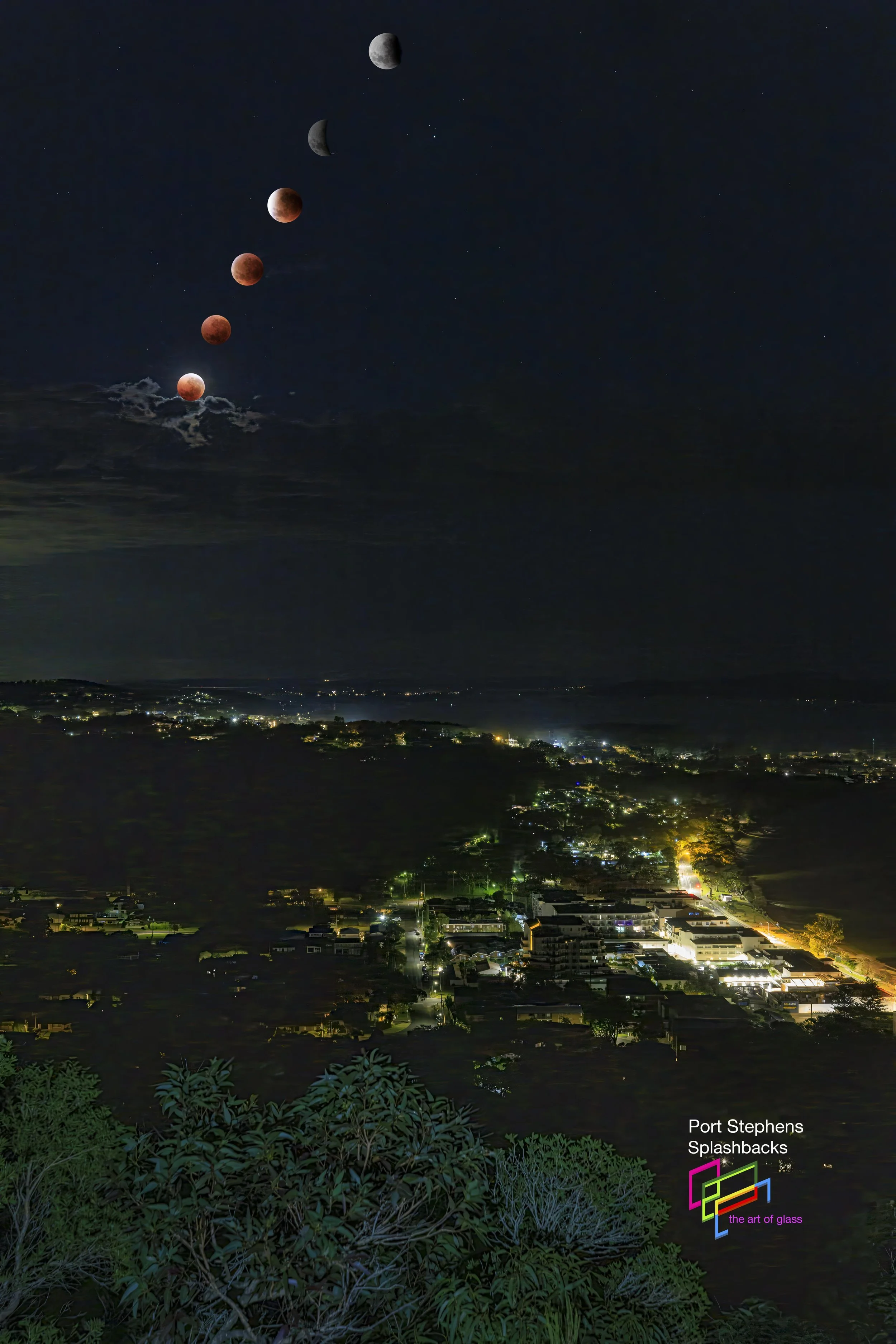
lunar eclipse time lapse over Shoal Bay September 2026
The night sky is about to put on a much more sleep-friendly show.
On 3 March 2026, a lunar eclipse will grace the evening hours — a welcome change from last year’s event that had many of us rubbing our eyes and clutching thermoses of coffee in the early hours of the morning. This time, the timing couldn’t be kinder: the eclipse will unfold as the Moon is rising, making it far easier to catch without sacrificing a full night’s rest.
A perfectly timed celestial event
The eclipse will begin at 10:04 PM, just as the Moon climbs into view. From there, Earth’s shadow will steadily creep across the lunar surface until the moment of maximum eclipse between 10:33 PM and 10:33 PM, when the Moon will appear at its darkest and most dramatic. The event will then gradually wind down, concluding at 11:02 PM.
Because the eclipse happens during moonrise, there’s something extra special about this one. Watching the shadowed Moon emerge above the horizon can create a striking visual effect — the Moon often appears larger and tinted with warm hues due to atmospheric scattering near the horizon.
Fingers crossed for clear skies
As always with skywatching, one factor remains out of our control: the weather. Lunar eclipses require nothing more than clear skies and a good view of the Moon, so let’s hope cloud cover stays minimal on the night. Even thin cloud can soften the view, while a clear sky reveals the subtle reds and copper tones that make eclipses so memorable.
A gentler experience than last year
Many skywatchers will remember last year’s eclipse, which ran roughly between 1 AM and 5 AM — a much tougher commitment for those balancing work, family, or just a love of sleep. Still, those who made the effort were rewarded with spectacular views, especially from elevated vantage points. A photograph taken from the summit of Stephens Peak captured the Moon glowing softly in Earth’s shadow, a reminder of the magic that comes with staying up late for the sky.
This year, thankfully, no all-nighter is required.
Don’t miss it — the wait will be long
If you’re thinking, “I’ll catch the next one,” you might want to reconsider. After this event, the next full lunar eclipse won’t occur until 2028. That makes the March 2026 eclipse a rare opportunity — not just astronomically, but also in terms of its unusually convenient timing.
So mark your calendar, set a reminder, and maybe scout out a good viewing spot ahead of time. With a bit of luck and clear skies, the rising eclipsed Moon could provide one of the most beautiful nighttime sights of the year — no alarm clock required.